


Environment means our surroundings. It includes air, water , earth , sea or we can say it includes what we can say Panchamahabhuta (पंचमहाभूत).
Environmental protection constitutes an integral part of the developmental process. Sustainable development and environmental protection goes hand in hand. It cannot be considered in isolation. Sustainable development means the development which meets the needs of the present but not affects the needs of future generations as well.
Peace, development and environment are interdependent and indivisible. Integration of environment and development leads to eco-friendly inclusive growth. The growth which fulfills the basic needs, improved living standards for all, better protected and managed ecosystem and safer , more prosperous future.
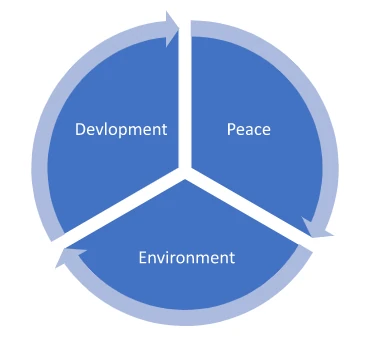
The problem of environmental pollution is the problem of both developed and under developed or poor nations. We can categorise it into following:
Poverty is the worst form for environmental pollution because the part of the population who do not have means to get one meal a day , clothes to cover and shelter to live in cannot possibly think about environmental protection. For them any method by which they can survive is the best. Further as they are not educated and hence they are not having enough awareness to know or understand the problem.
However, there may be exceptions or disagreement with the fact as best eco- friendly practices can be seen in some tribal and interior rural areas , people of which are not so educated but have adopted various methods for the protection of the environment.
If we analyse the genesis of the problem above both developing and developed countries, we found that the developed nations are well-educated but their greed is eternal. They have enough for their needs but greed leads them to over exploitation of natural resources. That is what we can say: “they are not utilising the natural resources but they are plundering it.”
In other hand in developing and underdeveloped countries they are starving for the fulfilment of their needs.
Data:
The Intergovernmental Panel on Climate Change (PCC in its 4th Assessment Report submitted in 2007 has come out with incontrovertible evidence that the atmospheric concentration of greenhouse gases like carbon dioxide (CO,), methane and nitrous oxide, has by far exceeded and it has touched the highest levels in the recorded history.
The IPCC Report forecasts that India would be among the countries worst affected by the rising temperature due to global warming. Among the various consequences, there may be a drop of 38 per cent in per capita water availability by 2050 for Indians as dry days are becoming frequent. There are some alarming points of the report.
Dr. Punam Suri, while explaining the consequences of interference with nature by human beings and effects of coronavirus, rightly stated that “since time immemorial, a human being which is just a small organism, using the power of his brain, tried to control and rule over all other forms of life. And in his struggle for power, he played havoc with Nature. This (coronavirus) epidemic has proven to us that when faced with the wrath of nature, a microorganism, like coronavirus, is sufficient to paralyze, maim, and strangulate the entire human race. Let this be lesson to us, though a very expensive one, that all humanity must live with nature and not at the expense of it.”
Post covid scenario mindset of philosopher of concept of possibilism must tend towards Determinism.
© VIDHOON All Rights Reserved