


The exception of per incuriam under the doctrine of precedents can be understood in two ways. Per incuriam means “carelessness”, although in practice it is understood as per ignoratium, meaning ignorance of law. When courts ignore law and proceed to pass judgment, the said decision falls under the spectrum of per incuriam and does not necessarily need to be followed.
“A decision can be said to be given per incuriam when the court of record has acted in ignorance of any previous decision of its own, or a subordinate court has acted in ignorance of a decision of the court of record. As regards the judgments of this Court rendered per incuriam, it cannot be said that this Court has “declared the law” on a given subject-matter, if the relevant law was not duly considered by this Court in its decision.
The ‘per incuriam’ rule is strictly and correctly applicable to the ratio decidendi and not to obiter dicta.
Per Incurium is a latin term Per means through and Incurium means lack of care
If any decision or judgement given by any court of law in ignorance of Statutory provisions and precedents is known as per incurium.
Before going into the doctrine of per nincurium we must know that what Precedent is ?
High Court and Supreme Court decisions are to be considered as precedent.
As per section 141 of Indian Constitution Law declared by Supreme Court to be binding on all Courts within the territory of india.
Gurbaksh Singh Sibbia vs State of Punjab 1980 -This judgement has set precedent regarding the anticipatory bail under section 438 Crpc. This judgement was given by the Constitutional bench of 5 judges.
After there were following judgements in same matter but have totally reverse view that of Sibbia Judgement:
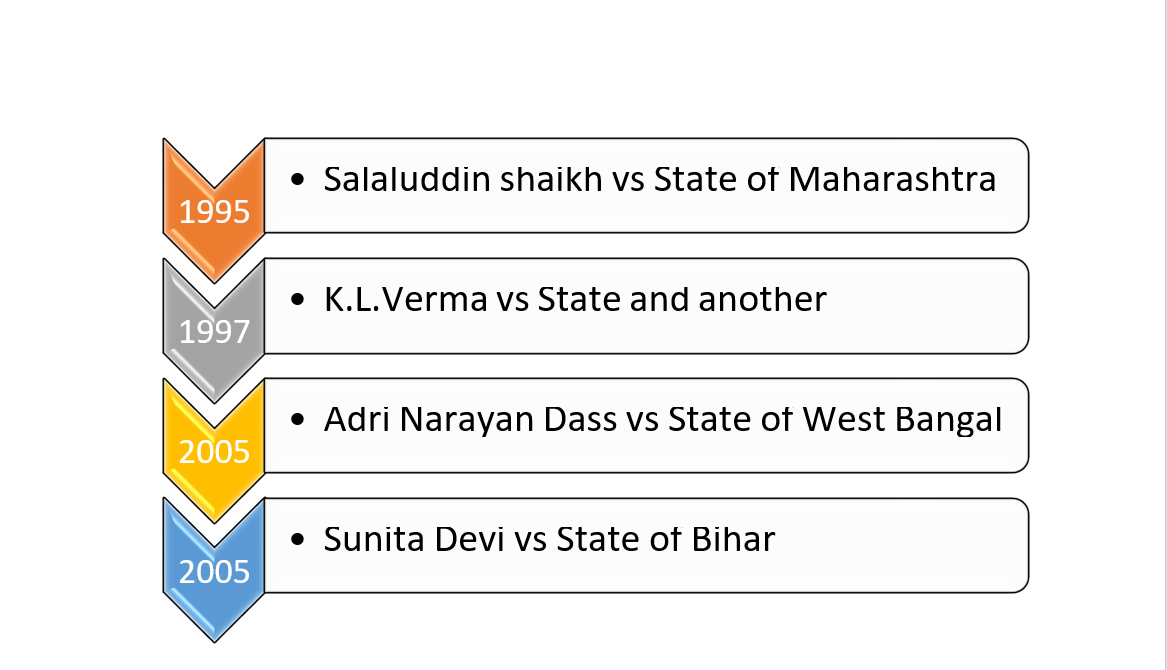
In the case of Siddharam Mhetre vs State of Maharashtra and Ors 2010 all above five judgements of the Supreme Court held to be per incurium because :
© VIDHOON All Rights Reserved